

Residential HPWHs
Credit: NEEA
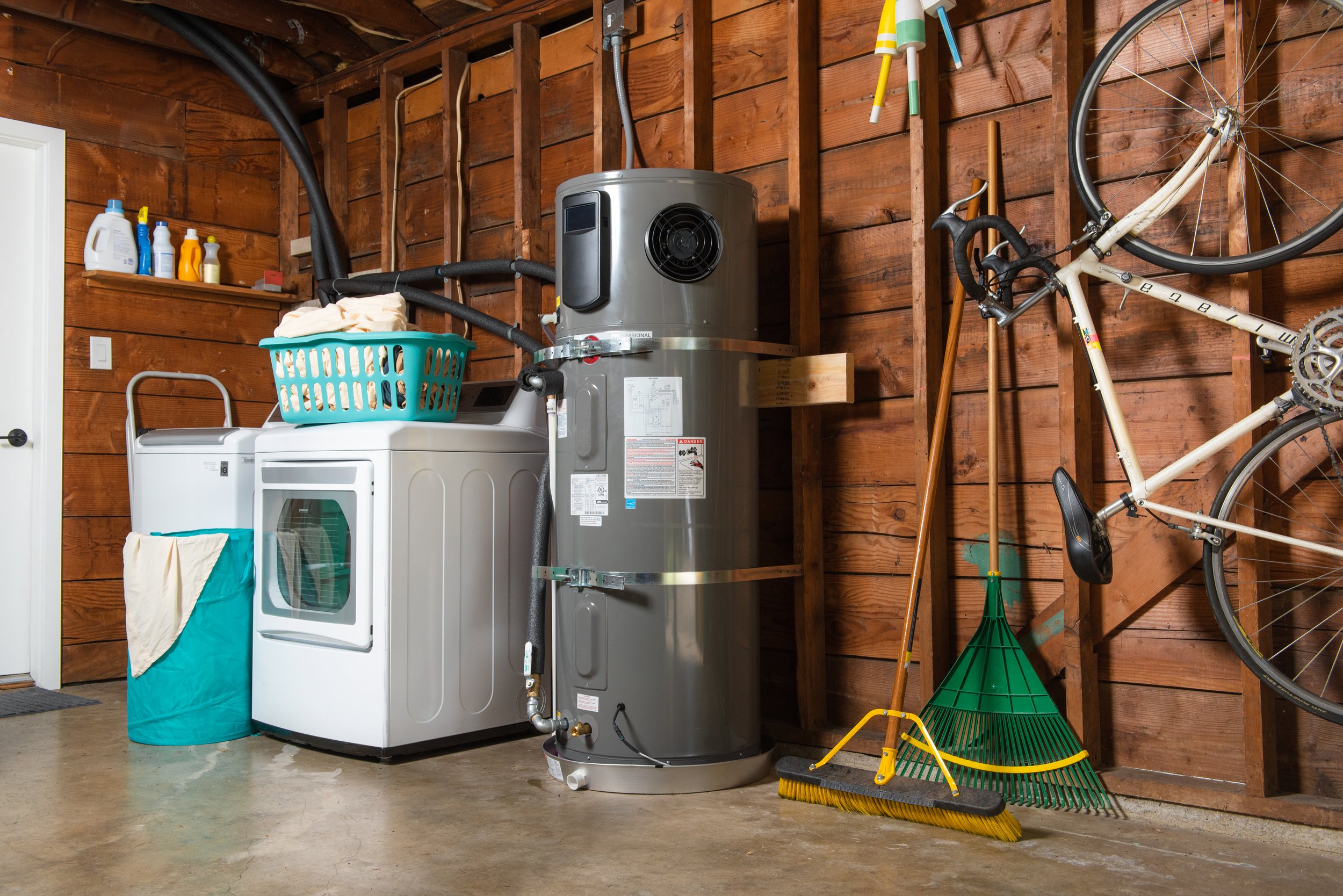
Heat pump water heaters (HPWHs) are critical for residential decarbonization. By installing this technology, single-family homeowners can reduce energy use and emissions by more than three quarters compared to traditional gas or electric resistance water heaters (ERWHs). HPWHs also save users hundreds of dollars annually after they upgrade from an ERWH. Additionally, they are operationally cost-competitive with gas units.
Types of Residential HPWHs
-
These are the main type of HPWH on the market currently. They consist of a heat pump on top of a water tank that has electric resistance elements that are used as backup during periods of high demand. There are over a dozen manufacturers who produce unitary HPWHs today.
-
For homes with gas or propane water heaters looking to switch to a HPWH, several manufacturers produce 120V units. 120V HPWHs only require a 15-amp circuit and can plug into standard 120V outlets. These reduced electrical requirements can help avoid service upgrades. They are best for households with four or fewer occupants, though, as 120V HPWHs have lower first-hour ratings due to small or nonexistent backup heating elements.
-
Split systems are heat pump water heaters in two parts, with the air-to-refrigerant heat exchanger designed to be located outside. With the heat pump outside, and the tank inside or in a garage, the two components are then connected with piping. Advantages can include space flexibility (tank can be in a confined space), low GWP refrigerant (carbon dioxide), reduced indoor noise, and lack of cool air created inside the house.
-
“Combi” heat pump—a.k.a. “multi-function”, or“combo” heat pump—uses a single heat pump to provide heating, cooling, and domestic hot water, often with thermal storage. Combi systems can lower the required heat pump capacity, decrease the number and footprint of necessary equipment, reduce electrical demand and energy consumption during peak periods, reduce refrigerant use, extend cold climate performance, among other benefits.
-
Flexible voltage HPWHs are capable to run at both 120V and 240V of power. This type of HPWH came to the market in 2025 and can be especially useful in gas replacements. A consumer can plug their HPWH into a standard 120V outlet when it is first installed and later run a 240V electric line if they want to have the electric resistant backup elements.
Credit: NEEA
Do-It-Yourself (DIY) HPWH Installations
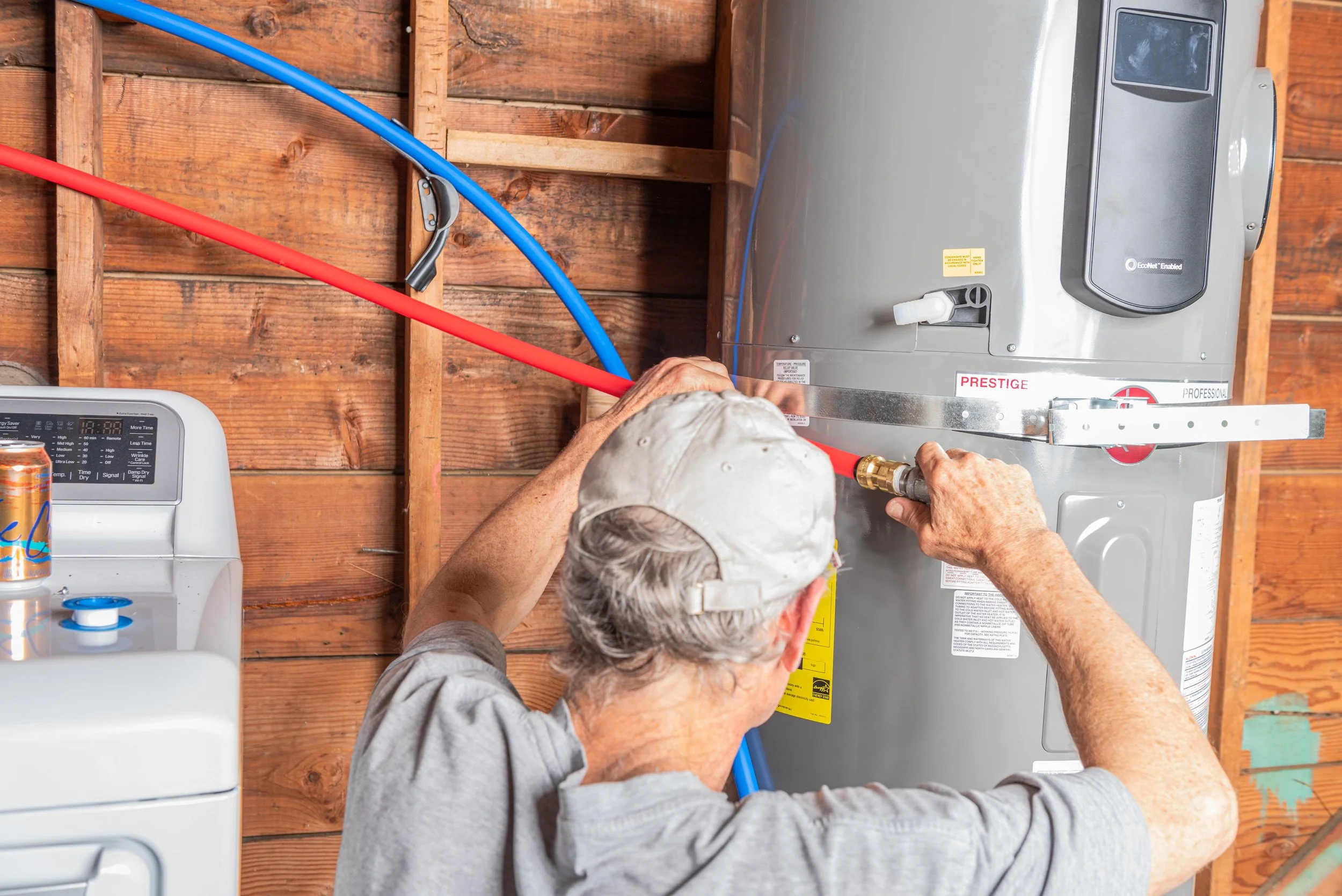
Surveys show that 30-50% of HPWH installations are DIY in markets like the Northwest and California.
DIY-ing your HPWH installation can save thousands of dollars. Our surveys showed homeowners saved 70% on average on HPWH installation costs or $1,900.
Residential HPWH Resources
-
Report:
2025 State of the Heat Pump Water Heater Market Report
NBI’s Advanced Water Heating Initiative (AWHI) has released its annual Heat Pump Water Heaters State of the Market Report. This in-depth report offers an overview of the latest in both commercial and residential heat pump water heater (HPWH) innovation in the U.S. and explores policy, technology and other market forces accelerating adoption across the industry.
-
Online Tool:
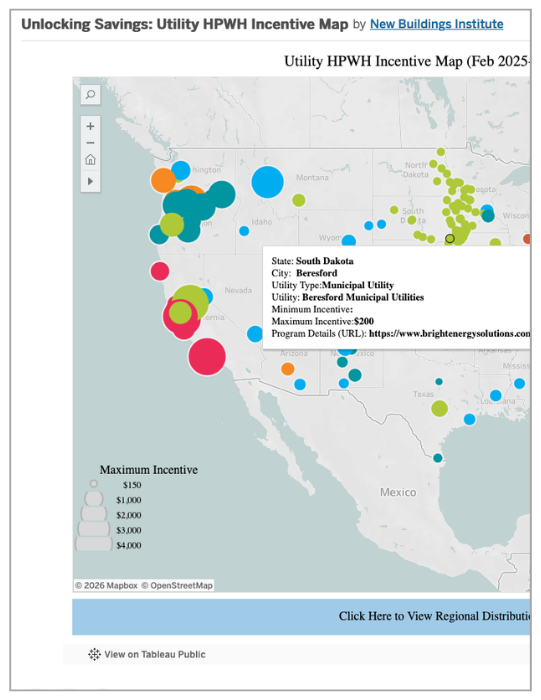
Unlocking Savings: Utility HPWH Incentive Map
AWHI created a utility incentives tracker that shows 150 different HPWH incentives (current as of February 2026) across the United States.
-
Photos:
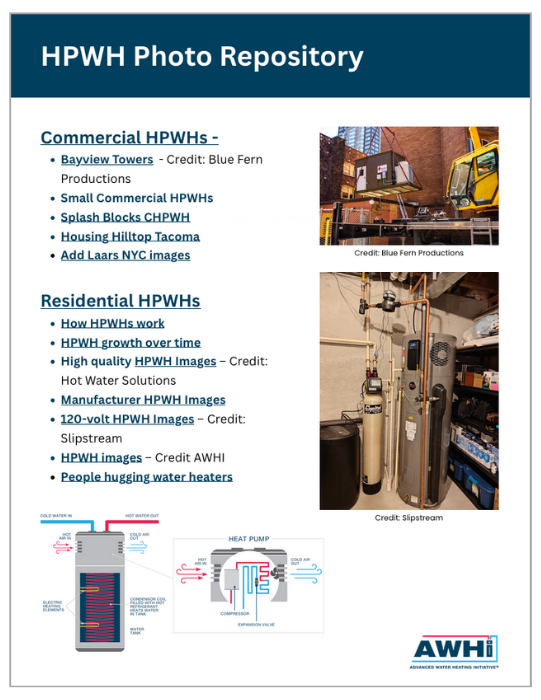
HPWH Photo Repository
Download from a collection of commercial and residential heat pump water images and diagrams.
-
Factsheet:
Heat Pump Water Heaters for Residential Customers
Heat pump water heaters (HPWHs) are the most efficient water heating technology available. Known for their efficiency, cost savings, and environmental benefits, HPWHs continue to grow in popularity.This factsheet will guide you on what you need to know about this innovative technology and provide resources to simplify HPWH adoption in your home.
-
Factsheet:
Combi Heat Pump Systems: One Unit, Double Duty
A technological evolution of heat pumps consolidates both space conditioning (heating and/or cooling) and domestic hot water functions into a single, efficient unit.
Historically, homeowners have relied on separate, often inefficient systems for space conditioning and hot water. While innovations like heat pump technology have improved efficiency, combination (Combi) heat pump systems represent the next step in technological advancement by integrating both functions into a single unit.
-
Factsheet:
A Brief History of Heat Pump Water Heaters (HPWHs)
This factsheet outlines the evolution of heat pump water heaters, tracing their roots back to 18th-century thermodynamic discoveries by pioneers like Willem Cullen and Lord Kelvin. With a streamlined graphic, it highlights early innovations, market struggles during the late 20th century, and eventual breakthroughs such as the ENERGY STAR certification in 2009. Steady growth continued through the 2010s, supported by national initiatives like the Advanced Water Heating Initiative (AWHI). By the 2020s, HPWHs became significantly more efficient and began gaining mainstream adoption, driven by updated regulations and improved technology.
-

Report:
Residential Heat Pump Water Heater Cost Drivers and Opportunities for Compression
Heat pump water heaters (HPWHs) offer substantial environmental and financial benefits, cutting residential energy use and emissions by over 75% compared to gas or electric resistance models. However, high upfront installation costs remain a key barrier to adoption. These costs often exceed the price of the equipment itself, driven by factors like labor, driving time, system complexity, plumbing challenges, and electrical upgrades. This report from AWHI looks at cost for HPWH installations and how to lower them, exploring regional differences, limited contractor availability and DIY installations, along with potential cost cutting solutions which include streamlined rebate processes, packaged pricing, improved lead generation, and affordable installer training. (2025)
-

Factsheet:
Celebrate Earth Day every day with a heat pump water heater
The Advanced Water Heating Initiative (AWHI) examined how much carbon dioxide emissions is saved when replacing a gas water heater with a heat pump water heater. Heat pump water heaters (HPWHs) are incredibly efficient which means they save both energy and carbon dioxide (CO2) emissions. Replacing a gas water heater with a HPWH can save more than 2,000 lbs of CO2 every year. That’s the equivalent of growing more than 17 trees for 10 years according to data from the U.S. Environmental Protection Agency. That equates to over 12 tons of CO2 over the life of the water heater!
-

Report:
2024 State of the Heat Pump Water Heater Market Report
HPWHs have emerged as a solution for reducing energy consumption, utility bills and decarbonizing the energy intensive water heating sector. This report looks at the history of development and adoption, the current market size and growth rate, and forecasts future growth given the policy drivers propelling the industry. Included in this report is a product landscape highlighting the technological advancements of residential and commercial HPWHs. The HPWH market has experienced significant growth in the first 15 years since being certified as an ENERGY STAR product and is poised for unprecedented growth over the next 5-10 years as it looks to become the dominant water heating technology by the end of the decade. Collaboratively overcoming existing barriers is key to ensure successful market transformation for the policy drivers pushing this technology to new heights. (2024)
-
Report:
Midwest 120V Heat Pump Water Heater Field Study: Final Report
In 2022, Slipstream completed market research and modeling of 120 Volt (120V) HPWHs in Midwest homes and found that 120V HPWHs can provide sufficient hot water for residents with typical hot water usage. However, interviews with plumbers, distributors, and retailers indicated that they would be unlikely to sell the product in the region without validation of high performance in cold climates. Based on this information, Slipstream launched a field validation in the Midwest to evaluate the performance of units in real homes. This report summarizes the research, in which four utilities in Midwestern states partnered to assess cold climate performance, and outline market potential, and savings opportunities. Recommendations are provided for programs on the best applications of the units, installation guidelines and best practices, interview and survey results from installers and consumers, and quantitative analyses of effectiveness and efficiency. (2024)
-

White Paper:
Increasing Equitable Access to Heat Pump Water Heaters
This paper aims to share data about current methods and programs to overcome barriers to the adoption of heat pump water heaters in low-to-moderate income households and disadvantaged communities. These barriers include high initial costs, the split incentive between landlords and tenants, technical constraints, workforce challenges, and local policy barriers. The paper outlines opportunities and considerations to help ensure that those who cannot afford HPWHs or have other barriers preventing their installation are not left with the negative impacts of gas-fueled and electric resistance water heaters. The ultimate goal of these programs is to realize long-term energy savings, emissions reductions, and financial benefits for LMI people and across disadvantaged communities. (2024)
-

Resource Guide:
The Why, What, and How of Successful Heat Pump Water Heater Programs
Heat Pump Water Heaters (HPWHs) can deliver significant energy savings, substantial cost savings, and dramatic reductions in air pollution. However, Low- to Moderate-Income (LMI) households and members of disadvantaged communities often lack access to the benefits that HPWHs can deliver. Fortunately, some current and emerging programs have found ways to improve the equitable distribution of HPWHs.This guide discusses the need for and the benefits of HPWHs in LMI households and across disadvantaged communities. It also provides a summary of current successful and emerging federal, state, and regional HPWH programs. This guide was released in parallel with the paper “Increasing Equitable Access to Heat Pump Water Heaters” . Contact us to learn how you can get started in your community. (2024)
-

Report:
Development and Validation of Price and Load-Responsive Controls for 120-volt Heat Pump Water Heaters
Heat pump water heaters (HPWHs) aren't just great for saving energy—they're also an excellent tool for demand response. As electrification gains momentum, the timing of energy use will become increasingly important to avoid grid strain. Luckily, HPWHs are an excellent behind-the-meter resource for mitigating demand spikes. HPWHs can act as thermal batteries, storing energy when it's the cheapest and cleanest, then turning off during peak demand periods. New Buildings Institute partnered with Lawrence Berkeley National Laboratory to develop and test innovative load shifting strategies on twelve 120-volt HPWHs scattered throughout California. This report explores the results of five months of load shift testing using CTA-2045 signals sent via the SkyCentrics platform. (2024) -

Report:
Plug-In heat Pump Water Heater Field Study Findings & Market Commercialization Recommendations
Water heating and space heating together account for two thirds of residential energy usage in the U.S. and should be the cornerstones of any plan to decarbonize the built environment. Emerging, plug-in 120-volt heat pump water heaters (HPWHs) are entering the market and proving themselves to be important new offerings from manufacturers aiming to address some of the key barriers. This report provides an overview of lessons learned on the first ever third-party field validation effort on the 120-volt HPWH technology through California-wide installations and includes a market assessment and recommendations for commercialization. (July 2023)
-

Guide:
Heat Pump Water Heater Technical Guide
Heat pump water heaters are a proven technology that can be used as a component of going electric in homes and business. By switching to HPWH technology, installers will be first to meet present and future growing consumer demand. Follow the strategies and tips here to utilize current space available with little-to-no redesign needed. This guide explains benefits of HPWHs and outlines important considerations for the installer. (June 2021)